Collagen Production

Highest Concentration Available

Daily Application

Physician-Prescribed

Results in 4-8 Weeks

Collagen Production

Highest Concentration Available

Daily Application

Physician-Prescribed

Results in 4-8 Weeks

Discover Detailed GHK-Cu Insights

Explore evidence based GHK-Cu content covering dosing, safety, results, and more.

Category

Categories
1
Showing 24 articles
Category
×
Key Insights

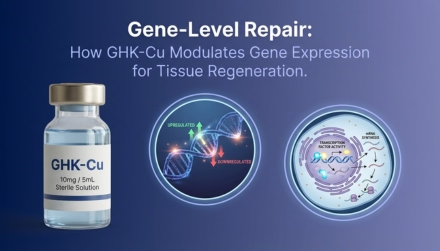
GHK-Cu Gene Expression: How It Drives Regeneration

A guide to studies on GHK-Cu peptide gene expression and regenerative effects. Covers how GHK-Cu modulates gene expression at the molecular level, which genes are upregulated (collagen, antioxidant, wound healing) and downregulated (pro-inflammatory), regenerative effects on skin and wound repair, collagen synthesis and fibroblast proliferation mechanisms, anti-inflammatory properties and safety profile, latest clinical trial findings on skin rejuvenation and wound healing, and practical implications for dermatology and regenerative medicine.

Learn more

↗

Dosage Guidelines

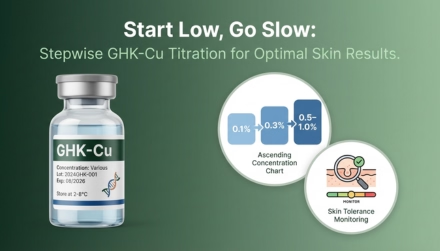
GHK-Cu Titration: Start Low, Optimize Smart

A practical guide to GHK-Cu titration strategies for optimized results. Covers optimal topical concentrations (0.1 to 1.0%), how peptide chemistry influences dosage, benefits of correct concentration (skin repair, anti-aging, elasticity), stepwise titration protocols (0.1% → 0.3% → 0.5 to 1.0%), adjusting dosage based on skin response, best practices for application, delivery optimization methods (microneedling, transdermal patches), monitoring and safety, common side effects, and clinical evidence supporting safe use.

Learn more

↗

Peptide Benefits

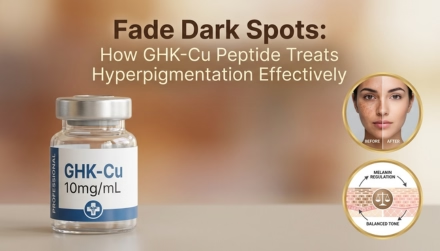
GHK-Cu for Dark Spots & Sun Damage

A guide to GHK-Cu peptide benefits for hyperpigmentation and sun damage treatment. Covers how GHK-Cu supports skin regeneration, its key properties (collagen stimulation, melanin regulation, antioxidant effects), what the research shows about pigmentation and photoaging, how GHK-Cu treats hyperpigmentation by normalizing melanin levels, sun damage repair through collagen synthesis and antioxidant defense, recommended application guidelines (twice daily under moisturizer with sunscreen), safety for sensitive skin, and expected results timeline of 4 to 8 weeks.

Learn more

↗

Skin Health

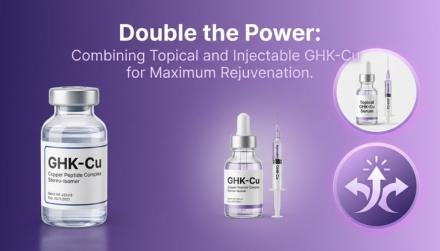
Topical + Injectable GHK-Cu: The Combination Protocol

A comprehensive guide to combining topical and injectable GHK-Cu protocols for skin regeneration and anti-aging. Covers how GHK-Cu supports skin repair via collagen synthesis, key anti-aging benefits (wrinkle reduction, elasticity, hydration), best practices for topical application (0.5 to 2% concentration, twice daily), injectable administration by trained clinicians, synergistic benefits of combining both approaches, clinical evidence supporting hybrid protocols, safety considerations and side effects, recommended dosages, and practical tips for maximizing results.

Learn more

↗

Hair Health

GHK-Cu Scalp Injections: Protocols & Safety Guide

A comprehensive guide to injectable GHK-Cu scalp protocols and safety for hair restoration. Covers GHK-Cu's mechanism for hair follicle regeneration, key biochemical properties (antioxidant activity, angiogenesis), step-by-step injection protocols for intradermal scalp delivery, safety guidelines and side effect management, clinical evidence supporting efficacy, patient preparation and informed consent, post-treatment aftercare (no washing 24h, sun protection, hydration), dosing intervals (every 2 to 4 weeks), combination with other treatments (minoxidil, PRP), and regulatory status (not FDA-approved for injectable use).

Learn more

↗

Practical Guide & Patient Education

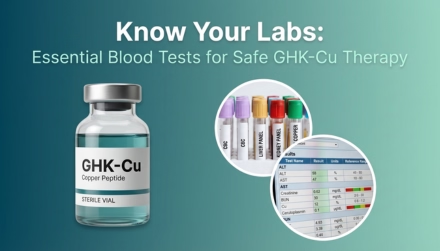
GHK-Cu Lab Monitoring: Tests You Need

A guide to recommended labs and monitoring for safe GHK-Cu therapy. Covers essential blood tests (CBC, liver function, kidney function, serum copper levels), the role of serum copper testing in monitoring GHK-Cu effectiveness, how liver and kidney panels ensure therapy safety, recommended monitoring frequency (every 4 to 6 weeks initially, then every 3 to 6 months), key biomarkers indicating potential adverse effects (ALT, AST, serum creatinine), best practices for interpreting lab results, and how structured monitoring improves therapeutic outcomes and patient-provider collaboration.

Learn more

↗