Titration Strategies for GHK-Cu to Optimize Results: Effective Dosing and Administration Guide
A practical guide to GHK-Cu titration strategies for optimized results. Covers optimal topical concentrations (0.1 to 1.0%), how peptide chemistry influences dosage, benefits of correct concentration (skin repair, anti-aging, elasticity), stepwise titration protocols (0.1% → 0.3% → 0.5 to 1.0%), adjusting dosage based on skin response, best practices for application, delivery optimization methods (microneedling, transdermal patches), monitoring and safety, common side effects, and clinical evidence supporting safe use.
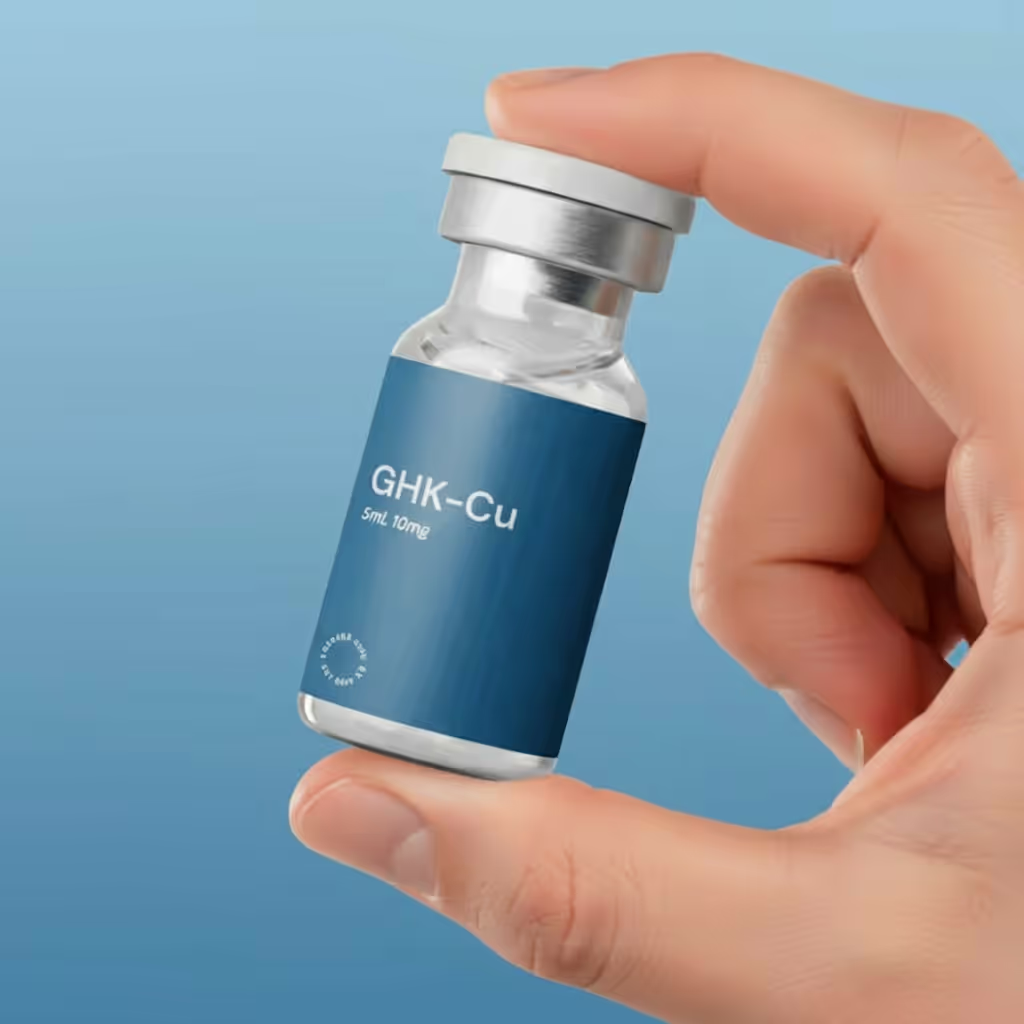
- GHK-Cu is a copper peptide with regenerative effects for skin repair, anti-aging, and elasticity improvement.
- Recommended topical concentrations are generally 0.1 to 1.0%; higher concentrations don't reliably improve results and can increase irritation.
- The peptide's chemistry (copper binding, stability, pH, carrier) affects absorption and collagen-stimulating activity.
- Start low (0.1%) and monitor skin response before increasing, stepwise titration adapts dose to individual tolerance.
- Microneedling and transdermal patches can increase penetration; microneedle-treated skin showed significant GHK-Cu permeation with no irritation.
- Regular monitoring reduces risk and improves outcomes; adjust one variable at a time (dose or frequency).
- Common side effects are mild and temporary (redness, stinging); allergic responses are rare.
- Clinical data indicate good tolerability when used as directed within recommended concentration ranges.
GHK-Cu is a copper peptide used for skin regeneration. This guide summarizes safe titration, recommended concentrations, chemistry that affects dosing, and a stepwise schedule to optimise outcomes while minimising irritation.
What Is the Optimal GHK-Cu Peptide Concentration for Skin Regeneration?
For topical use, 0.1 to 1.0% is the typical effective range. Staying within this window balances efficacy and tolerability; higher concentrations do not reliably improve results and can increase irritation.
How Does GHK-Cu Peptide Chemistry Influence Dosage?
GHK-Cu is a tripeptide bound to copper; copper availability and peptide stability affect penetration and activity. Formulation, pH and carrier ingredients influence pharmacokinetics and may change the effective dosing needed.
Which Benefits Result from Correct GHK-Cu Concentration?
Appropriate GHK-Cu dosing can deliver clear outcomes:
- Enhanced Skin Repair: Stimulates collagen and elastin to support wound healing and reduce scarring.
- Anti-Aging Effects: Can lessen fine lines and improve overall skin appearance.
- Improved Skin Elasticity: Increases firmness and resilience when used consistently.
| Protocol Step | Concentration | Frequency | Duration | Skin Response to Monitor |
|---|---|---|---|---|
| Initial Dose | 0.1% | Once daily | Week 1 | Monitor for redness, stinging, or dryness |
| Adjustment 1 | 0.3% | Once daily | Week 2 to 3 | Assess for improvement; confirm tolerance |
| Final Dose | 0.5 to 1.0% | Once daily | Week 4+ | Evaluate overall skin health; maintain if tolerated |
| Overuse Signs | Current dose too high | Redness, irritation, excess dryness → lower concentration or frequency | ||
| Underuse Signs | Current dose too low | No visible improvement → consider gradual increase |
How to Develop a Safe GHK-Cu Dosing Schedule?
Use a stepwise plan that tests tolerance and finds a maintenance dose tailored to your skin.
- Start Low: Begin at a low concentration (e.g., 0.1%) to assess tolerance.
- Monitor Reactions: Observe skin for redness, stinging or dryness during initial applications.
- Gradually Increase: If tolerated, raise concentration incrementally toward 0.5% or higher as needed.
What Are Stepwise Titration Protocols for GHK-Cu?
Titration protocols increase dose in planned steps, using skin response to guide adjustments from testing to maintenance.
- Initial Dosing: Start with 0.1% once daily.
- Incremental Adjustments: After one week, increase to 0.3% if well tolerated.
- Final Adjustment: Move to 0.5% (or up to 1.0%) only with positive response and no irritation.
How to Adjust GHK-Cu Dosage Based on Skin Response?
Change dosage only in response to clear signs: reduce for irritation, increase gradually if no improvement.
- Signs of Overuse: Redness, irritation or excess dryness, lower concentration or frequency.
- Signs of Underuse: No visible improvement, consider a gradual increase.
- Recommended Adjustments: Tweak one variable at a time (dose or frequency) and reassess.
Frequently Asked Questions
What is GHK-Cu and how does it work?
GHK-Cu (Glycyl-L-histidyl-L-lysine copper(II)) is a natural copper peptide that binds copper ions to promote collagen and elastin synthesis, reduce inflammation and support tissue repair.
Can GHK-Cu be used with other skincare products?
Yes. It is generally compatible with hyaluronic acid, retinoids and antioxidants; introduce combinations slowly and monitor for irritation.
How long does it take to see results from GHK-Cu?
Results vary, but many users see texture and elasticity improvements within 4 to 8 weeks of consistent use.
Is GHK-Cu safe for all skin types?
GHK-Cu is usually well tolerated, including by sensitive skin, though individual responses differ; patch testing and stepwise titration reduce risk.
What should I do if I experience side effects from GHK-Cu?
If irritation occurs, reduce frequency or concentration and stop if severe; consult a dermatologist if symptoms persist.
Can GHK-Cu be used during pregnancy or breastfeeding?
Data are limited; pregnant or nursing individuals should consult a healthcare provider before using new topical products.
What Are the Best Practices for GHK-Cu Peptide Administration?
Follow basic application steps to improve delivery and results.
- Cleanse the Skin: Apply to clean skin for better absorption.
- Apply Sparingly: A small amount avoids overloading the skin.
- Follow with Moisturizer: Seal in benefits with a compatible moisturizer.
Which Methods Optimize GHK-Cu Delivery to Skin?
Delivery methods can enhance penetration; choose based on goals and safety.
- Microneedling: Creates micro-channels for deeper delivery when performed safely.
- Transdermal Patches: Offer controlled release over time.
- Combination Therapies: Use alongside complementary ingredients to boost effects.
Research has investigated advanced delivery methods to increase penetration and maintain safety.
Microneedle Delivery for Enhanced GHK-Cu Skin Permeation & Safety
The depth and percentage of microneedle penetration correlated with application force and influenced enhancement of GHK-Cu skin permeability. In 9 h, 134 ± 12 nanomoles of peptide and 705 ± 84 nanomoles of copper permeated through microneedle-treated human skin, while almost no peptide or copper permeated intact skin. No obvious signs of skin irritation were observed after microneedle pretreatment combined with GHK-Cu.
Source: Microneedle-Mediated Delivery of Copper Peptide Through Skin: Li et al., H Li, 2015
| Category | Detail | Guidance |
|---|---|---|
| Application, Cleanse | Apply GHK-Cu to clean skin | Improves absorption; remove makeup and debris first |
| Application, Amount | Apply sparingly | Small amount avoids overloading; spread evenly |
| Application, Seal | Follow with compatible moisturizer | Locks in benefits; pairs well with hyaluronic acid |
| Delivery, Microneedling | Creates micro-channels for deeper penetration | 134 ± 12 nanomoles permeated in 9h; no irritation observed (Li 2015) |
| Delivery, Transdermal Patches | Controlled release over time | Option for sustained delivery; follow product instructions |
| Delivery, Combination | Use alongside complementary ingredients | Retinoids, antioxidants; introduce gradually |
| Safety, Patch Test | Test before full application | Apply small amount to inner forearm; wait 24h |
| Safety, Monitoring | Regular skin inspections | Watch for irritation or allergic signs; adjust one variable at a time |
| Safety, Professional Consult | Seek dermatologist for persistent issues | Essential for complex regimens or severe reactions |
What Are the Common Side Effects and Safety Considerations of GHK-Cu Titration?
Most side effects are mild and temporary; allergic responses are rare. Patch testing and gradual titration lower risk.
- Mild Irritation: Temporary redness or stinging may occur.
- Allergic Reactions: Uncommon but possible; stop use if suspected.
- Safety Precautions: Patch test before full application and discontinue for severe reactions.
Clinical studies and reviews report that GHK-Cu can increase collagen production and improve elasticity with generally good tolerability across formulations. Monitor symptoms, lower exposure when needed, and seek professional care for persistent issues.
Conclusion
GHK-Cu titration follows a simple principle: start low at 0.1%, monitor your skin's response, and increase incrementally to 0.3% then 0.5 to 1.0% only when tolerated. This stepwise approach personalises dosing while controlling irritation risk. Advanced delivery methods like microneedling can significantly boost permeation, with clinical data showing substantial peptide penetration through treated skin with no irritation. Combined with proper cleansing, sparing application, and regular monitoring, a structured titration protocol lets you capture GHK-Cu's full regenerative potential safely.
Disclaimer: This information is for educational purposes only and does not constitute medical advice. GHK-Cu is a peptide supplement and may not be approved for all uses in all jurisdictions. Always consult a licensed healthcare provider before starting, stopping, or changing any treatment. Individual results vary.