GHK-Cu Dosage Calculator: Find Your Ideal Dose for Optimal Results
Calculate your ideal GHK-Cu dose with our dosing chart, reconstitution guide, and administration protocols for topical and injectable copper peptide therapy.
- Injectable GHK-Cu doses typically range from 1 mg to 3 mg daily, with most patients starting at 1 to 2 mg administered subcutaneously once daily
- Topical GHK-Cu serums are typically formulated at 1% to 3% concentration the clinical standard for visible improvements in skin firmness and texture
- Your protocol topical, injectable, or both depends on your primary goals: skin regeneration, hair restoration, wound healing, or systemic anti-aging
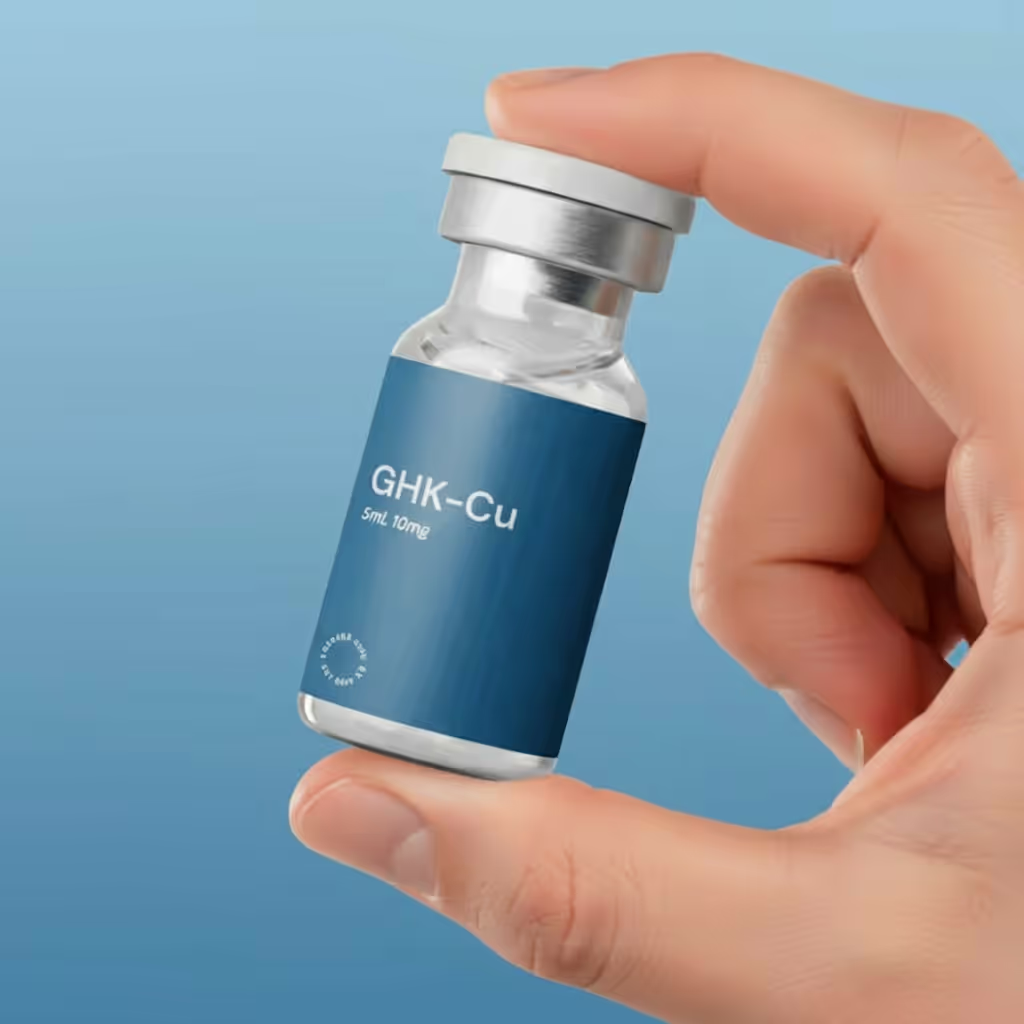
- Proper reconstitution, concentration, and storage are critical for injectable GHK-Cu to maintain peptide stability and ensure accurate dosing
- All GHK-Cu therapy requires prescription and supervision by a licensed healthcare provider
Important: Compounded medications are not FDA-reviewed for safety, quality, or efficacy. A licensed healthcare provider must evaluate whether GHK-Cu is appropriate for you.
What Makes GHK-Cu Different From Other Skin and Hair Therapies?
GHK-Cu (glycyl-L-histidyl-L-lysine copper) is a naturally occurring copper-binding tripeptide present in human plasma, saliva, and urine. It was first isolated in 1973, when researchers discovered it could prompt aged liver tissue to produce proteins resembling those of younger tissue, a finding that launched five decades of regenerative medicine research.
Unlike topical retinoids or vitamin C serums that work on the skin's surface, GHK-Cu operates at a cellular and genetic level. Research published in the International Journal of Molecular Sciences established that GHK-Cu modulates the expression of over 4,000 human genes, essentially signaling aging cells to behave more like younger cells.
What it does:
- Stimulates collagen Type I and Type III synthesis
- Activates elastin and glycosaminoglycan production
- Promotes fibroblast proliferation and keratinocyte migration
- Signals hair follicles back into active growth phase
- Reduces inflammation via suppression of TNF-α and IL-1β
- Accelerates wound healing and tissue repair
Why this affects your dose: Because GHK-Cu can be delivered both topically and via subcutaneous injection, dosing depends heavily on your treatment goals and delivery method. Topical protocols use percentage concentration rather than weight-based dosing. Injectable protocols use weight-volume calculations similar to other peptide therapies.
GHK-Cu Dosage Ranges: What the Research Shows
Injectable GHK-Cu Dosing by Goal
| Treatment Goal | Starting Dose | Typical Range | Notes |
|---|---|---|---|
| General skin anti-aging | 1 mg/day | 1 to 2 mg/day | Lower doses for tolerability |
| Hair follicle restoration | 1 to 2 mg/day | 1 to 3 mg/day | May combine with topical protocol |
| Wound healing & tissue repair | 1 to 2 mg/day | 2 to 3 mg/day | Physician-directed per wound severity |
| Systemic regeneration | 2 mg/day | 2 to 3 mg/day | Cycle 4 to 6 weeks on, 2 to 4 weeks off |
Topical GHK-Cu Concentration by Goal
| Treatment Goal | Recommended Concentration | Application Frequency |
|---|---|---|
| Preventive anti-aging | 0.5% to 1% | Once daily (PM) |
| Active skin repair | 1% to 2% | Once to twice daily |
| Clinical skin rejuvenation | 2% to 3% | Once daily, physician formulated |
| Scalp and hair restoration | 1% to 2% | Once daily to scalp |
| Post-procedure recovery | 0.05% to 0.1% gel | As directed by physician |
Dosing Considerations by Patient Profile
- For skin-focused patients: Topical-first protocols at 1% to 2% concentration are the standard approach. Injectable GHK-Cu is added when patients seek deeper systemic regeneration or when topical results plateau.
- For hair restoration patients: A combined protocol (topical serum applied to the scalp daily plus low-dose injectable (1 to 2 mg/day)) tends to produce the most consistent follicle reactivation results.
- For post-procedure recovery: Low-concentration topical GHK-Cu (0.05% to 0.1%) is typically recommended in the first 72 hours after laser resurfacing, microneedling, or chemical peels to accelerate epithelial recovery.
- For older adults (55+): No formal age-based dose adjustment is required. Older patients typically have significantly lower endogenous GHK-Cu levels (declining from ~200 ng/mL at age 20 to ~80 ng/mL by age 60) and may respond well to both topical and injectable delivery.
- Patients with Wilson's disease or copper metabolism disorders: GHK-Cu is contraindicated. Do not use.
How to Calculate Your Injectable GHK-Cu Dose
Step 1: Determine Your Vial Concentration
After reconstitution, concentration depends on vial size and volume of bacteriostatic water added:
| Vial Size | Bacteriostatic Water | Final Concentration |
|---|---|---|
| 5 mg | 2.5 ml | 2 mg/ml (2000 mcg/ml) |
| 5 mg | 5 ml | 1 mg/ml (1000 mcg/ml) |
| 10 mg | 5 ml | 2 mg/ml (2000 mcg/ml) |
| 10 mg | 10 ml | 1 mg/ml (1000 mcg/ml) |
| 20 mg | 10 ml | 2 mg/ml (2000 mcg/ml) |
Step 2: Calculate Units on Your Syringe
Using a standard U-100 insulin syringe (100 units = 1 ml):
Formula: Units to draw = (Desired dose in mg ÷ Concentration in mg/ml) × 100
Example calculations at 2 mg/ml concentration:
| Desired Dose | Calculation | Units to Draw |
|---|---|---|
| 1 mg | (1 ÷ 2) × 100 | 50 units |
| 2 mg | (2 ÷ 2) × 100 | 100 units |
| 3 mg | (3 ÷ 2) × 100 | 150 units |
Example calculations at 1 mg/ml concentration:
| Desired Dose | Calculation | Units to Draw |
|---|---|---|
| 1 mg | (1 ÷ 1) × 100 | 100 units |
| 2 mg | (2 ÷ 1) × 100 | 200 units |
| 3 mg | (3 ÷ 1) × 100 | 300 units |
Quick Reference Card
10 mg vial reconstituted with 5 ml (2 mg/ml)
| Dose | Units to Draw |
|---|---|
| 0.5 mg | 25 units |
| 1 mg | 50 units |
| 2 mg | 100 units |
| 3 mg | 150 units |
Reconstitution: Getting It Right
What You Need
- GHK-Cu lyophilized powder vial
- Bacteriostatic water (not sterile water or saline)
- Sterile syringes, one for mixing, separate ones for injections
- Alcohol swabs
- Clean, flat work surface
- Refrigerator for immediate storage post-reconstitution
Reconstitution Process
1. Prepare your workspace. Clean your surface and wash your hands thoroughly. Gather all supplies before starting.
2. Clean the vial tops. Wipe the rubber stoppers of both the GHK-Cu vial and bacteriostatic water vial with alcohol swabs. Allow to air dry fully.
3. Draw the bacteriostatic water. Using a sterile syringe, draw your calculated amount per your physician's or pharmacy's instructions.
4. Add water to the GHK-Cu vial slowly. Insert the needle at an angle and direct the stream toward the glass wall, not directly onto the powder. GHK-Cu is a delicate peptide; slow, steady addition prevents structural disruption.
5. Allow to dissolve. The powder should dissolve fully within 1 to 2 minutes. Gently roll the vial if needed. Never shake, shaking damages the peptide-copper complex and reduces biological activity.
6. Inspect the solution. Reconstituted GHK-Cu should appear clear with a faint blue-green tint (characteristic of the copper complex). Do not use if the solution is cloudy, precipitated, or strongly discolored.
Storage After Reconstitution
- Refrigerate at 36 to 46°F (2 to 8°C) immediately
- Store away from light, the copper complex is light-sensitive
- Use within 28 days of reconstitution
- Never freeze reconstituted GHK-Cu, freezing disrupts the peptide-copper bond
- Stable at room temperature for up to 12 hours if travel requires
Important note on GHK-Cu stability: Unlike some peptides, GHK-Cu is particularly sensitive to pH extremes, oxidation, and temperature fluctuation. Always use humectant-compatible bacteriostatic water and handle with care. If you notice discoloration or precipitation, discard and reconstitute fresh.
Administration Protocol
Injectable GHK-Cu Timing
Injectable GHK-Cu can be administered at any time of day. Many patients prefer morning injection to align with active daytime cellular repair processes, but physician guidance takes precedence.
Guidelines:
- Daily administration is standard for active treatment phases
- Cycle protocols are common: 4 to 6 weeks on, 2 to 4 weeks off, to maintain receptor sensitivity and avoid potential copper accumulation
- If you miss a daily dose, take it when you remember, do not double dose
- Your physician may prescribe a 5 days on / 2 days off weekly schedule as an alternative to daily use
Injection Technique
GHK-Cu is administered via subcutaneous injection into the fatty tissue just beneath the skin.
Preferred injection sites:
- Abdomen (at least 2 inches from the navel)
- Front or outer thigh
- Upper arm (outer area)
For hair and scalp goals: Some protocols use intradermal or scalp microneedling with topical GHK-Cu serum applied immediately after, creating micro-channels for significantly enhanced peptide penetration, approaching the bioavailability of injectable delivery without systemic injection.
Site rotation: Rotate injection sites daily to prevent localized tissue reactions, scarring, or copper accumulation at a single site.
Technique:
- Clean the injection site with an alcohol swab and allow to dry
- Pinch a fold of skin between your fingers
- Insert the needle at a 45 to 90° angle
- Inject slowly and steadily
- Remove the needle and apply gentle pressure, do not rub
- Dispose of the used needle in a sharps container
Topical Application Protocol
For skin rejuvenation:
- Cleanse face thoroughly and pat dry
- Apply 2 to 4 drops of GHK-Cu serum to fingertips
- Press gently into skin, do not rub vigorously
- Allow 60 to 90 seconds for absorption before applying moisturizer or SPF
- Follow with broad-spectrum SPF 30+ in the AM
For scalp and hair:
- Part hair at the application area
- Apply serum directly to the scalp, not the hair shaft
- Massage gently with fingertips for 60 seconds to stimulate circulation
- Leave in, do not rinse
- Apply once daily, ideally at night
Treatment Phases and Expected Timeline
Phase 1: Initiation (Weeks 1 to 2)
Your skin and scalp are responding to the initial GHK-Cu signal. Results at this stage are primarily at the cellular level, not yet visually apparent.
What to expect:
- Improved skin hydration and reduced surface dryness
- Reduced redness and irritation, particularly in reactive or sensitive skin
- Mild tingling at injection sites (normal and temporary)
Phase 2: Active Repair (Weeks 3 to 6)
Collagen synthesis and inflammatory modulation are underway.
What to expect:
- Smoother skin texture and more even tone
- Early improvement in fine line depth
- Scalp health improvement, less flaking, improved circulation
- Early signs of hair follicle reactivation in hair restoration protocols
Phase 3: Visible Regeneration (Month 2 to 3)
Structural collagen and elastin remodeling produces visible, measurable changes.
What to expect:
- Measurable improvement in skin firmness and density
- Reduction in fine lines and surface photoaging
- Visible improvement in hair density and shaft thickness
- Improved skin barrier function, reduced reactivity to environmental triggers
Phase 4: Full Optimization (Month 3 to 4+)
Cumulative GHK-Cu effect reaches its peak expression.
What to expect:
- Continued collagen density improvement
- Sustained hair follicle health
- Skin tone, texture, and elasticity at new baseline
- Physician reassessment of maintenance protocol
Signs Your Protocol May Need Adjustment
Signs Your Dose May Be Too Low
- No improvement in skin hydration or texture after 4 weeks at current dose
- No change in hair shedding or density after 8 weeks on scalp protocol
Signs You May Be Experiencing Side Effects
- Persistent mild redness, itching, or irritation at the injection site beyond the first week
- Unusual bluish or greenish discoloration at the injection site (may indicate improper copper absorption or injection technique, contact your provider)
- Paradoxical skin aging or increased breakouts, rare but reported anecdotally; may relate to elevated MMP activity at high doses
- Symptoms of copper accumulation (extremely rare at therapeutic doses): abdominal discomfort, nausea, metallic taste
If you experience any of these symptoms, contact your provider before your next scheduled dose.
Factors That Affect Your Response
Lifestyle Factors
- Sun protection: GHK-Cu is actively repairing UV-induced photoaging. Continuing sun exposure without SPF protection undermines therapy. Broad-spectrum SPF 30+ daily is non-negotiable during treatment.
- Diet: Adequate zinc, vitamin C, and protein intake supports the collagen synthesis pathways that GHK-Cu activates. Nutritional deficiencies can blunt results.
- Stress: Chronic stress elevates cortisol and inflammatory markers that directly counteract GHK-Cu's anti-inflammatory and regenerative effects.
- Sleep: Cellular repair processes, including collagen synthesis, are most active during sleep. Seven to nine hours of quality sleep amplifies GHK-Cu's regenerative effects.
Medical Factors
- Baseline skin condition: Patients with significant photodamage, deep structural wrinkles, or advanced hair loss may require a longer treatment timeline before visible results are apparent.
- Age: Because endogenous GHK-Cu declines sharply with age, older patients are often more responsive to exogenous GHK-Cu therapy, their baseline levels are lower, and the therapeutic delta is larger.
- Concurrent treatments: GHK-Cu is highly compatible with microneedling, PRP, exosomes, low-level laser therapy, and ceramide-based skincare. It is less compatible with strong exfoliating acids (AHAs/BHAs) applied simultaneously, these can degrade the peptide at the skin surface. Always disclose concurrent skincare treatments to your physician.
- Copper sensitivity: Individuals with known copper sensitivity or Wilson's disease should not use GHK-Cu. Patients taking medications that affect copper metabolism should discuss this with their physician.
Frequently Asked Questions
How long until I see results?
Skin hydration and texture improvements typically appear within 2 to 4 weeks. Fine line reduction and firmness improvements become measurable by weeks 6 to 8. Hair density changes take longer, most patients notice meaningful improvement between months 2 and 4.
Can I combine topical and injectable GHK-Cu?
Yes, many patients use both. Injectable GHK-Cu delivers systemic regenerative effects, while topical application concentrates the peptide's action at the skin surface and scalp. Your physician will design a combined protocol if appropriate.
Can I use GHK-Cu with other skincare actives?
GHK-Cu is compatible with niacinamide, ceramides, hyaluronic acid, and most barrier-supportive ingredients. Avoid applying strong AHAs, BHAs, or vitamin C simultaneously, apply at different times of day. Your physician or pharmacist can advise on specific combinations.
Should I cycle off GHK-Cu?
Most injectable protocols recommend a 2 to 4 week break after every 4 to 6 week cycle to maintain receptor sensitivity and prevent potential copper accumulation. Topical use can typically continue without cycling. Follow your physician's protocol.
Is GHK-Cu safe long-term?
GHK-Cu has been used in cosmetic formulations for decades and has an excellent tolerability record at standard concentrations. Injectable long-term data is more limited, physician monitoring during extended protocols is recommended.
What is the "copper uglies" phenomenon?
A small subset of users report paradoxical skin effects, accelerated breakouts or surface aging when first starting copper peptide therapy. This is thought to relate to GHK-Cu's stimulation of matrix metalloproteinases (MMPs), which initially increase collagen turnover before net collagen synthesis improves. This effect is rare, typically temporary, and more often associated with very high concentrations or improper formulations. Report any worsening skin effects to your provider.
Working With Your Healthcare Provider
GHK-Cu therapy requires a prescription and medical supervision. Your provider should:
- Evaluate your skin, hair, and health goals during your initial assessment
- Determine whether a topical-only, injectable-only, or combined protocol is appropriate
- Recommend a specific formulation, concentration, and dosing schedule
- Schedule follow-up consultations at 4 to 6 week intervals to assess response
- Adjust your protocol based on visible results and any side effects
Be proactive in communicating your results, bring photos to follow-up visits to help your physician track objective changes over time.
Important Safety Information
- GHK-Cu is a naturally occurring peptide available through licensed U.S. compounding pharmacies via physician prescription. Compounded GHK-Cu is not FDA-reviewed for safety, quality, or efficacy.
- Do not use if you have Wilson's disease or a known copper metabolism disorder.
- Use with caution if you have active or suspected cancer, GHK-Cu promotes angiogenesis, and patients with oncological history should discuss this with their oncologist before use.
- Do not use if you are pregnant or breastfeeding.
- Report any unusual skin reactions, signs of copper toxicity, or worsening symptoms to your provider promptly.
- Never share your medication with others.
- Store and handle per pharmacy instructions.
This information is for educational purposes only and does not constitute medical advice. Always consult with a licensed healthcare provider before starting any peptide therapy. Individual results vary based on numerous factors including age, skin condition, health status, and adherence to treatment protocols.